Helping Families Know, Live and Share the Catholic Faith
At our 87th OAPCE conference, parents expressed a desire for stronger faith connections, greater Catholic knowledge and practical resources to use at home. In response, Faith at Home will become a regular newsletter feature, connecting Church teaching with the everyday joys and challenges of parenting and education.
The Catechism of the Catholic Church is a trustworthy summary of what Catholics believe and how we are called to live. Parents do not need to be theologians or read it from beginning to end. Each month, we will explore one teaching and consider:
- What does the Catechism teach?
- How can I live it as a parent?
- How can I teach it to my child?
- Where can I find trustworthy resources?
Our hope is to help parents grow in confidence as the first educators of their children in faith.
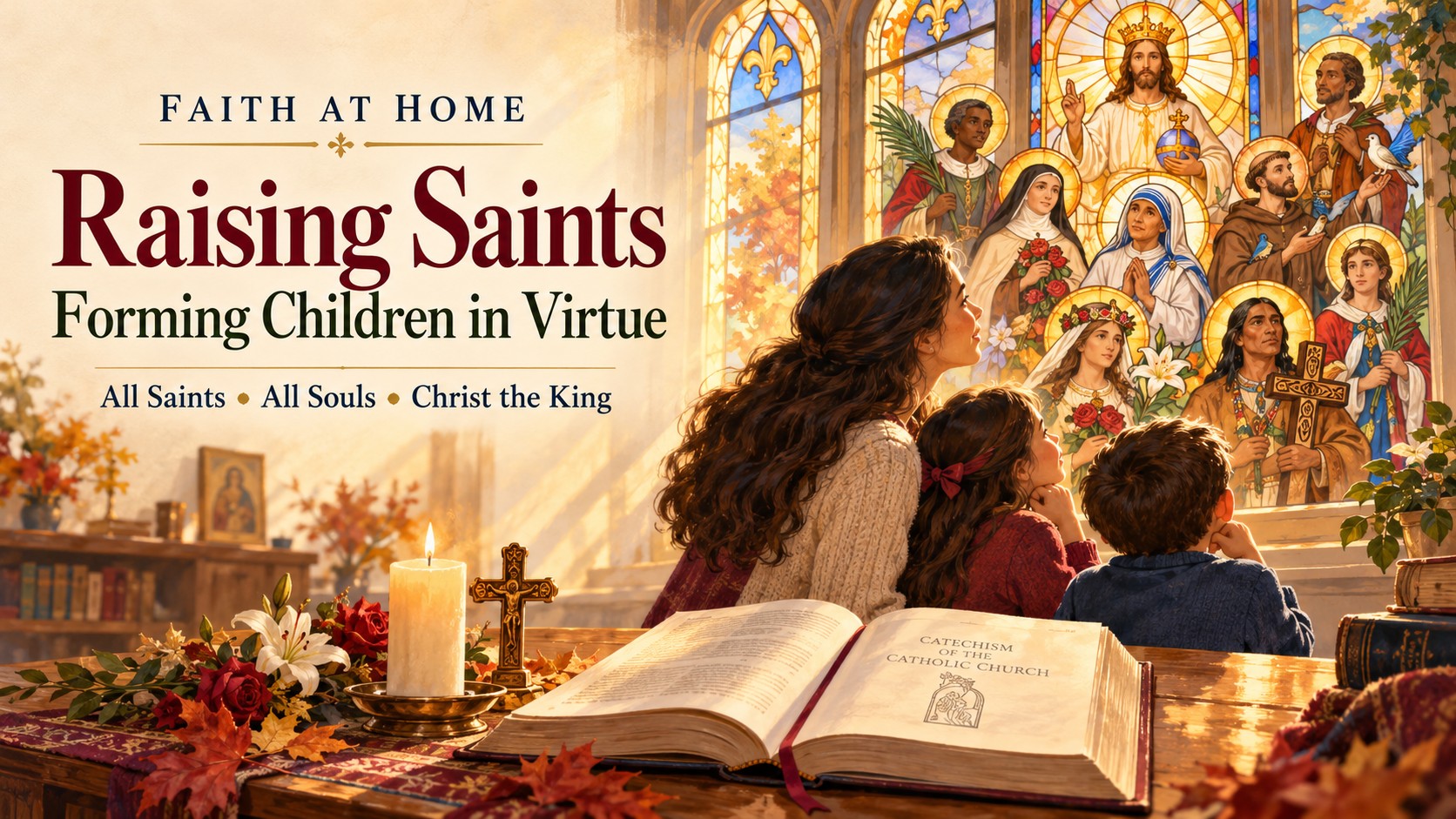
Looking Ahead: Raising Saints—Forming Children in Virtue
Saints Are Formed Through Small Daily Choices
From the Catechism
“A virtue is a habitual and firm disposition to do good.” — Catechism of the Catholic Church , 1803
The Catechism also reminds parents:
“The home is well suited for education in the virtues.” — Catechism of the Catholic Church , 2223
These two short teachings offer parents an encouraging message: children grow in holiness by repeatedly practising what is good, and one of the most important places for this formation is the home.
When we picture saints, we may imagine stained-glass windows, heroic sacrifices or people who lived long ago. This can make holiness seem distant from ordinary family life. Yet saints are formed through small, daily choices—telling the truth, including someone who is lonely, persevering through difficulty, controlling an angry response, forgiving after an argument and returning to God after making a mistake.
The goal is not to raise perfect children. It is to help our children recognize what is good, practise it faithfully and rely upon God’s grace when they fall.
What Does the Catechism Teach?
The Catechism identifies four virtues that play a central role in forming our character: prudence, justice, fortitude and temperance . These are called the cardinal virtues.
| Virtue | A parent-friendly explanation | What it can look like in a child’s life |
| Prudence | Stopping, thinking and choosing what is truly good | Considering consequences, asking for advice, selecting appropriate online content and thinking before reacting |
| Justice | Giving God and other people what is rightfully due to them | Telling the truth, sharing fairly, including others, respecting rules and taking responsibility |
| Fortitude | Having courage and perseverance when doing good is difficult | Completing challenging work, admitting a mistake, standing up for someone and trying again after disappointment |
| Temperance | Using good things with balance and self-control | Managing screen time, waiting patiently, controlling an angry response and knowing when enough is enough |
Virtues are developed through education, practice and repeated effort. However, Catholic virtue is more than positive behaviour or good character. We also need God’s grace. Prayer, the sacraments and the guidance of the Holy Spirit strengthen us when doing what is right is difficult.
The Catechism teaches that parents form children in virtue by creating a home where tenderness, forgiveness, respect, faithfulness and service are practised. Parents also teach powerfully when they acknowledge their own mistakes, apologize and begin again.
Children, in turn, help their parents grow in holiness. Families are formed together as everyone learns to forgive, serve and love more faithfully.
How Can I Live It?
Children learn virtue as much from what they observe as from what they are told. Parents can model virtue in simple ways:
- Pause before responding when emotions are high.
- Admit when you have made a mistake and ask for forgiveness.
- Speak respectfully about teachers, neighbours and family members.
- Keep promises, even when doing so is inconvenient.
- Establish reasonable limits around screens, spending and entertainment.
- Pray for guidance when facing a difficult decision.
- Notice and affirm good choices: “That took courage,” “You were very fair,” or “You showed self-control.”
Rather than telling a child only to “be good,” name the virtue being practised. This helps children develop the language to recognize moral choices.
Parents might say:
- “You showed fortitude when you kept trying.”
- “It was just to make sure everyone had a turn.”
- “You used prudence when you stopped to think first.”
- “Turning off the game when your time was finished showed temperance .”
How Can I Teach It?
From Halloween to a Celebration of Light
The word Halloween comes from All Hallows’ Eve —the evening before All Saints Day. Costumes, pumpkins and neighbourhood traditions can become a doorway into the fuller Christian celebration.
Rather than allowing the season to end with Halloween, families can continue the celebration by focusing on All Saints Day, All Souls Day and Christ’s victory over darkness.
Consider trying one of these ideas:
- Invite children to dress as a favourite saint, biblical person or Catholic hero.
- Suggest a “Parade of Saints” at school, in the parish or at home.
- Research the saint connected with each family member’s name.
- Choose a family patron saint for the coming year.
- Make saint cards that include a name, feast day, symbol and virtue.
- Read about a saint from your family’s culture or heritage.
Where Can I Find More?
Catechism Readings
- CCC 1803–1811: The Human Virtues
- CCC 946–962: The Communion of Saints
- CCC 2221–2227: Parents and Education in the Faith
Scripture for Family Reflection
- Hebrews 12:1: We are surrounded by a great cloud of witnesses.
- Matthew 5:1–12: The Beatitudes show us the path to holiness.
- Matthew 25:31–46: We serve Christ when we care for others.
- Galatians 5:22–23: The fruits of the Holy Spirit.
Places to Look
Parents can also find age-appropriate saint books, prayer resources and liturgical activities through their parish, Catholic school or local Catholic library. Check out Pauline Publishing , a Catholic book and media publisher operated by the Daughters of Saint Paul , an international missionary congregation of religious sisters.